

Magnuson 101: Supercharging FAQ for Beginners
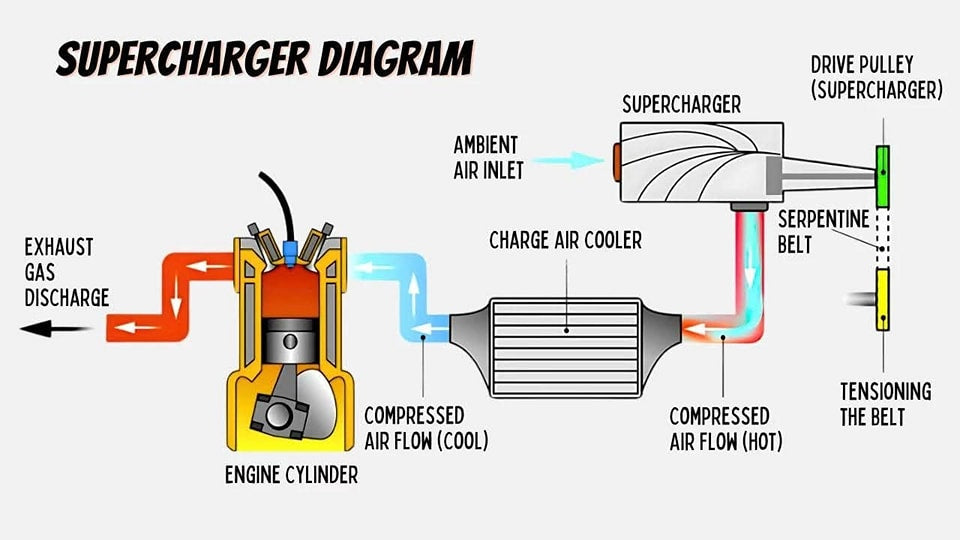
Tech Tip: Superchargers are a form of forced induction. They “force” air into the engine above normal atmospheric pressure. Magnuson’s systems typically produce about 5–8 psi of boost (pressure above atmosphere) in a stock engine, resulting in dramatic gains in performance while staying within safe limits.¹
What does a supercharger do and how does it work?
A Magnuson roots-style supercharger compresses air and forces it into the intake (arrows show “boosted” air flow). Driven by a belt connected to the crank, the supercharger pushes more oxygen into the engine, resulting in a bigger power boost.
Unlike a turbocharger (which is powered by exhaust gases), a supercharger is belt-driven directly by the engine’s crankshaft. Because it’s mechanically driven, boost is available instantly as engine RPM rises – there’s no turbo lag. The supercharger’s rotors spin rapidly to compress intake air on the fly. Many systems (including Magnuson’s) also incorporate an intercooler to cool the compressed air for better efficiency and performance. The result is more horsepower, immediate throttle response, and stronger acceleration whenever you hit the throttle. Magnuson’s roots-style superchargers are designed to deliver this power in a smooth, OEM-quality manner, thanks to decades of engineering refinement.

Is a supercharger better than a turbocharger?
Both superchargers and turbochargers are popular forced induction systems – each has its pros and cons. Neither is universally “better”; it depends on your goals. A turbocharger uses the engine’s exhaust flow to spin a turbine and compressor, while a supercharger is driven off the engine’s own power via a belt¹. This key difference leads to different driving characteristics:
- Power Delivery: Superchargers provide instant power – boost builds in line with engine RPM with no lag. Press the throttle, and a belt-driven supercharger responds immediately with added boost and torque, even at low RPM. Turbos, by contrast, can have a slight delay (turbo “spool” time) before they produce boost, especially at lower RPM. (Modern turbos have improved with technologies like twin-scroll turbines to reduce lag, but a supercharger still feels more linear and immediate by nature.)
- Efficiency: Because a supercharger draws engine power to run, it introduces a bit of parasitic loss (it uses some horsepower to make more horsepower). A turbo doesn’t rob engine power to spin – it’s driven by waste exhaust energy – so turbos can be more efficient in terms of power gained vs. energy used. However, superchargers avoid the backpressure that turbos create in the exhaust. Magnuson’s modern supercharger designs are highly efficient as well, using advanced Eaton TVS rotor technology for maximum performance output across the RPM range.
Power Curve: A supercharger will typically give a flatter, more immediate torque curve, boosting power at all engine speeds. A centrifugal supercharger (a specific type) and most turbos build boost more with RPM – meaning you get the biggest gains at higher revs, and less boost at low RPM¹. For street driving and towing, the supercharger’s low-end and midrange punch can make the car feel more powerful in everyday conditions, whereas a big turbo might shine mostly at full throttle near redline.
In summary, a turbo can offer a bit more peak efficiency, especially for high-RPM power, and can improve fuel economy in some cases. But a **supercharger delivers instantaneous, predictable boost and a very responsive throttle feel. There’s no waiting for boost to “spool up.” This makes superchargers fantastic for daily drivers, trucks, and muscle cars where strong low-end torque and on-demand power are desired. It’s no surprise many legendary performance cars (e.g. the Dodge Hellcat V8s and certain Corvettes) use superchargers for their boost. Plus, enthusiasts love the unique supercharger whine sound under the hood! Ultimately, Magnuson focuses on superchargers because of their consistent performance and OEM-level reliability. If you want instant acceleration and a straightforward, bolt-on power upgrade, a supercharger is a great choice.
How much horsepower will a supercharger add?
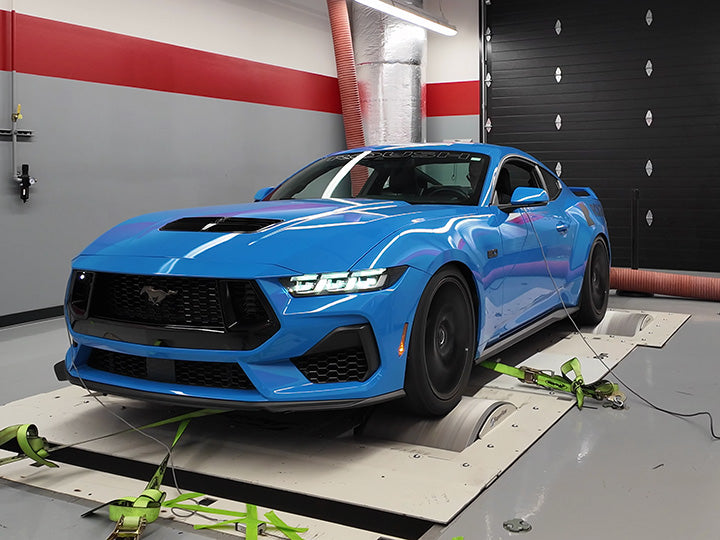
One of the most exciting things about adding a supercharger is the huge jump in horsepower (and torque). The exact power gain depends on your engine and the boost level, but it’s not unusual to see 20% to 50% more power with one of our supercharger kits! For example, Magnuson’s supercharger on a 5.7L Tundra added 143 horsepower and 128 lb-ft of torque to the wheels at just 7 psi of boost – about a 47% horsepower increase over stock. Likewise, a Magnuson system on a Toyota 4Runner’s 4.0L V6 yielded about 30% more power (going from ~270 HP stock to ~353 HP). Gains of 100+ horsepower are common on V8 engines with our kits, while smaller engines might gain 40-80 HP.
Keep in mind, these gains come without internal engine work – it’s the result of simply bolting on the supercharger kit and tuning. Factors like your base engine size, factory power, fuel octane, and supporting mods (exhaust, etc.) will affect the outcome. But any Magnuson supercharged setup will deliver a night-and-day difference in performance. You’ll feel a major increase in acceleration and pulling power. Horsepower isn’t the whole story either – you get a big boost in torque across the RPM range, which is what really pins you to the seat when you hit the gas.
Magnuson provides dyno-tested results for each of our supercharger systems, so you can see the before/after numbers for your specific vehicle. We focus on safe, reliable horsepower: our kits are typically tuned for moderate boost (often 5-8 psi) that your engine can handle on pump gas daily. This means you get impressive power gains without sacrificing longevity. For exact power figures, check out the product page for your vehicle – you’ll find dyno charts showing the horsepower and torque our kit delivers. Bottom line: a supercharger can transform your car, truck, or SUV with V8-level power and beyond, all while keeping it street-friendly.

Will a supercharger hurt my engine or affect reliability?
This is a common concern – after all, we’re forcing more power out of the engine. The good news is that a properly engineered supercharger kit will not inherently hurt your engine or reliability. In fact, Magnuson superchargers are designed to OEM standards for durability and safety. We extensively test our systems so that they work within the engine’s tolerances. Many enthusiasts have run supercharged vehicles for tens of thousands of miles – even 100k+ miles – without any engine problems. As long as you use the right supporting components and maintenance, your engine can last just as long as a non-supercharged engine.
Magnuson’s kits come with a tailored ECU calibration (tune) that ensures the air-fuel ratio, ignition timing, and boost levels stay in safe ranges. The built-in bypass valve on our superchargers helps regulate boost and reduce strain when full power isn’t needed. In one customer’s experience, the mechanic explained “the blower is not going to put out enough power to destroy the OEM parts”. In normal driving, the supercharger often isn’t producing boost (for example, cruising or idle, it bypasses airflow), so the engine isn’t under constant stress. When you do floor it, the tune adds fuel to keep things safe and the components (pistons, etc.) are operating within their design limits.
Of course, any time you make more power, you are using more of the engine’s potential. Good maintenance is key: use quality oil, proper octane fuel (most supercharged setups require premium fuel to prevent detonation), and don’t push beyond the kit’s intended boost. If you were to improperly install or aggressively “over-boost” an engine, then yes, you could cause reliability issues – but with Magnuson’s well-engineered kit and instructions, that’s not a concern. We even use high-strength materials and include any necessary upgrades (like fuel injectors or spark plugs if needed) to ensure the engine can handle the power.
In short, Magnuson superchargers will not ruin your engine’s reliability. They’re built to enhance performance without compromising durability. Many Magnuson owners daily drive their supercharged vehicles trouble-free. As long as you follow the guidance, a supercharged engine can be just as dependable as stock – just a whole lot more fun!
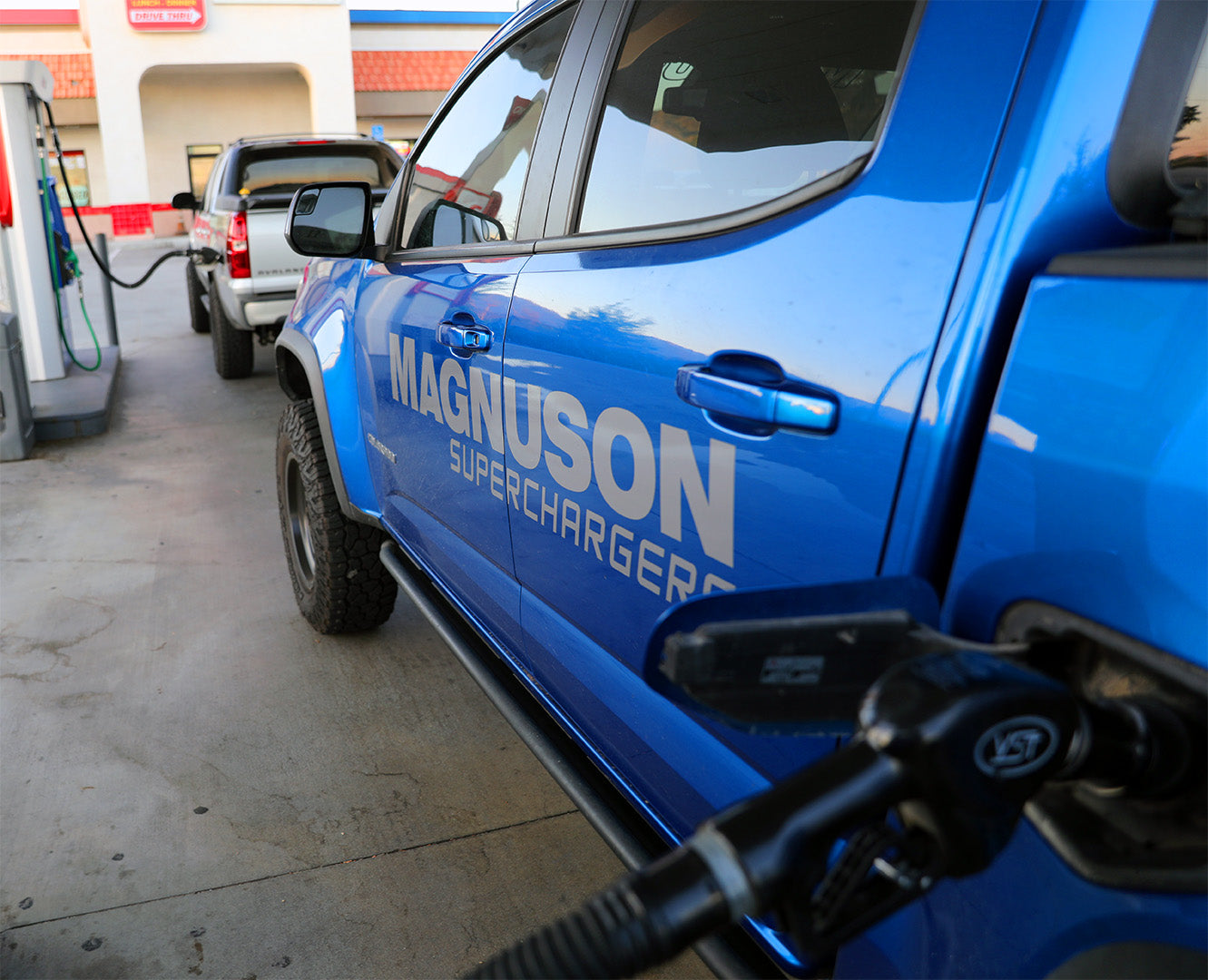
(Quick note on towing: Superchargers are also great for towing or hauling on trucks/SUVs – the added low-end torque makes pulling loads easier, with less strain and downshifting. It’s an awesome benefit for those who daily drive and tow on weekends.)*
Can I daily-drive a supercharged vehicle? (What about drivability and gas mileage?)
Absolutely – a car or truck with a properly tuned supercharger can be daily driven with no drama. In normal driving, a supercharged vehicle behaves very much like stock, just with an extra reserve of power on tap. The drivability can even improve; since you have more torque available, the engine doesn’t have to work as hard. For example, one user who added a Magnuson to his truck noted “driving was no different from stock. It actually improved drivability because less downshifting was needed to accelerate”. The power delivery is smooth and linear, especially with Magnuson’s careful ECU tuning. Many owners say “it feels like it came from the factory that way”, meaning the added power is integrated seamlessly.
During regular commuting – cruising on the highway or driving around town – the supercharger will be mostly in bypass mode (not producing boost), so the engine just breathes normally. This means fuel economy can remain close to stock when you’re light on the throttle . Magnuson’s systems use a vacuum-operated bypass valve that essentially lets the supercharger “freewheel” with minimal drag when you don’t need boost, improving efficiency . In steady highway driving, you might not notice much change in MPG.
Of course, when you use the power (put your foot down), you will consume more fuel – that’s the trade-off for making extra horsepower. If you drive aggressively and enjoy the boost often, expect gas mileage to drop compared to stock (because you’re dumping more fuel in to make that power).
In terms of daily reliability and manners, a supercharged vehicle can be very civil. The idle remains smooth (our kits maintain all factory idle controls), and general engine heat and behavior are within normal ranges (thanks in part to intercoolers and proper tuning). You might hear a subtle whine under the hood when you accelerate briskly – that’s the supercharger doing its job, and many enthusiasts actually love that sound. But at cruise, the bypass valve keeps it quiet.
Many Magnuson customers use their supercharged trucks and cars as daily drivers, in all climates. Whether it’s running errands or taking road trips, you can count on OEM-like drivability. Just remember to run the recommended premium fuel for best performance, and enjoy the extra performance on tap. Daily driving with 100+ extra horsepower makes even the commute a bit more fun!
Magnuson’s kits come with a tailored ECU calibration (tune) that ensures the air-fuel ratio, ignition timing, and boost levels stay in safe ranges. The built-in bypass valve on our superchargers helps regulate boost and reduce strain when full power isn’t needed. In one customer’s experience, the mechanic explained “the blower is not going to put out enough power to destroy the OEM parts”. In normal driving, the supercharger often isn’t producing boost (for example, cruising or idle, it bypasses airflow), so the engine isn’t under constant stress. When you do floor it, the tune adds fuel to keep things safe and the components (pistons, etc.) are operating within their design limits.
Of course, any time you make more power, you are using more of the engine’s potential. Good maintenance is key: use quality oil, proper octane fuel (most supercharged setups require premium fuel to prevent detonation), and don’t push beyond the kit’s intended boost. If you were to improperly install or aggressively “over-boost” an engine, then yes, you could cause reliability issues – but with Magnuson’s well-engineered kit and instructions, that’s not a concern. We even use high-strength materials and include any necessary upgrades (like fuel injectors or spark plugs if needed) to ensure the engine can handle the power.
In short, Magnuson superchargers will not ruin your engine’s reliability. They’re built to enhance performance without compromising durability. Many Magnuson owners daily drive their supercharged vehicles trouble-free. As long as you follow the guidance, a supercharged engine can be just as dependable as stock – just a whole lot more fun!
Will installing a supercharger void my warranty?
This is a big question for owners of newer vehicles. The short answer: No, a Magnuson supercharger by itself will NOT automatically void your entire vehicle warranty. In the United States, the Magnuson-Moss Warranty Act (no relation to our company’s name, interestingly!) prohibits manufacturers from voiding a warranty just because you installed an aftermarket part, unless they can prove that part caused the issue. Our superchargers are designed to work harmoniously with your vehicle. If installed correctly, they won’t inherently harm anything (as discussed above regarding reliability).
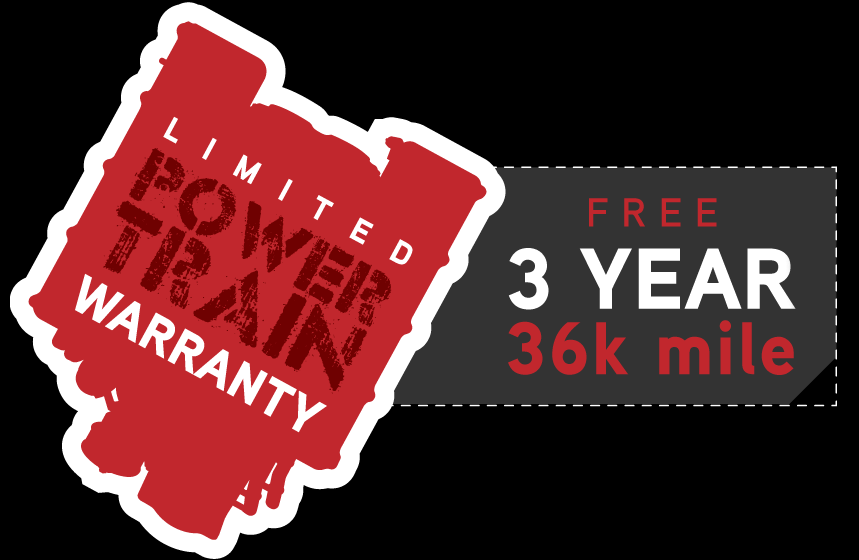
Magnuson Superchargers even come with their own warranty on the supercharger hardware and related components – typically a Standard 3-year/36,000-mile warranty on the supercharger system. We also offer an optional Limited Powertrain Warranty on certain kits/vehicles, which is extra coverage for your engine/transmission in the unlikely event something goes wrong. This reflects our confidence in the reliability of our product. We stand behind it, so you can have peace of mind.
Practically speaking, if you have a powertrain failure on a supercharged vehicle, a dealership could scrutinize whether the supercharger was the cause. If, for example, a failure was directly attributable to the supercharger (say a boost-related issue), they might deny coverage for that repair. But they cannot void your whole warranty just because you added a supercharger. In fact, Magnuson’s superchargers are warranty-friendly – we use OEM-quality materials and tuning that keeps your engine within safe limits. Many of our systems are even installed by OEM dealerships or upfitters as new-vehicle packages.
To be safe, you should have the supercharger kit professionally installed (or install it meticulously yourself) and use the provided calibration, so everything is within spec. Keep records of this. If any warranty dispute arises, you have documentation that you used a reputable, 50-state-legal kit. Speaking of legal: our kits are emissions-tested (CARB certified in many cases), which further shows they meet manufacturer standards.
(Pro Tip: Before starting an install, read the whole instruction manual first. Magnuson’s Support page has PDF manuals available (like the one included in your kit) – reviewing it will help you prepare tools and anticipate steps. Take your time and enjoy the process of adding some serious horsepower to your ride!)
How hard is it to install a supercharger kit?
Installing a supercharger is a significant upgrade, but Magnuson designs its kits to be as straightforward as possible for the average enthusiast or shop. Our supercharger systems are bolt-on kits – meaning you don’t have to machine parts or open up the engine internals. Essentially, you’ll be removing some components (intake manifold, accessory drive belt, etc.) and replacing them with the supercharger assembly and related parts. Everything you need is included in the kit, down to brackets, hardware, and a detailed instruction manual.
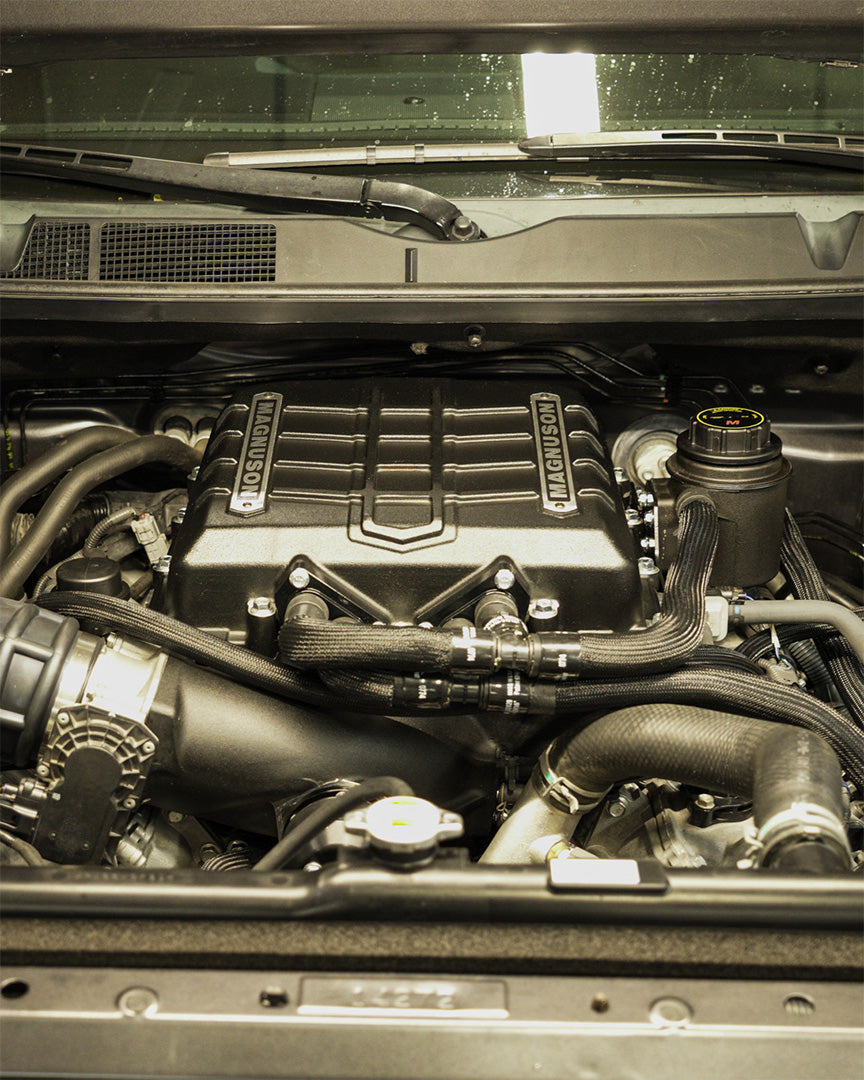
Installing a Magnuson supercharger involves mounting the supercharger assembly (as shown above on the front of this V8 engine) and hooking up the drive pulleys and belt, intercooler, and related components. Magnuson kits are engineered as “factory fit”, making the installation clean and reliable.
For an experienced mechanic, a typical supercharger installation can be done in about a day’s work (often in the 8–12 hour range, depending on the vehicle). If you’re a handy DIYer, you can tackle it over a weekend in your garage with normal automotive tools – many enthusiasts do. You’ll be following a sequence like: disconnect battery, drain some fluids, remove the intake manifold/fuel rails, bolt the supercharger/intake assembly in place, swap the crank pulley or add an extra pulley, route the new belt, install heat exchanger (for the intercooler), injectors (if provided), and then upload the tune to the ECU. Magnuson provides step-by-step instructions and even includes a handheld tuner device with pre-loaded calibration in most kits. This means no guesswork – just follow the guided steps. Our manuals often include photos for each step, torque specs, and tips for a seamless installation experience.
While it’s a bolt-on, it’s still a complex job simply due to the number of steps (expect to spend several hours and pay attention to detail). If you’re not comfortable doing this kind of work, we recommend using a professional installer. Magnuson has a network of authorized installers and a Find an Installer locator to help you connect with experienced shops. We even offer a factory install program at our facility for certain kits. Professional installation ensures everything is done by the book and you get the kit’s warranty validation.
Installing a supercharger is a significant upgrade, but Magnuson designs its kits to be as straightforward as possible for the average enthusiast or shop. Our supercharger systems are bolt-on kits – meaning you don’t have to machine parts or open up the engine internals. Essentially, you’ll be removing some components (intake manifold, accessory drive belt, etc.) and replacing them with the supercharger assembly and related parts. Everything you need is included in the kit, down to brackets, hardware, and a detailed instruction manual.
Installing a Magnuson supercharger involves mounting the supercharger assembly (as shown above on the front of this V8 engine) and hooking up the drive pulleys and belt, intercooler, and related components. Magnuson kits are engineered as “factory fit”, making the installation clean and reliable.
For an experienced mechanic, a typical supercharger installation can be done in about a day’s work (often in the 8–12 hour range, depending on the vehicle). If you’re a handy DIYer, you can tackle it over a weekend in your garage with normal automotive tools – many enthusiasts do. You’ll be following a sequence like: disconnect battery, drain some fluids, remove the intake manifold/fuel rails, bolt the supercharger/intake assembly in place, swap the crank pulley or add an extra pulley, route the new belt, install heat exchanger (for the intercooler), injectors (if provided), and then upload the tune to the ECU. Magnuson provides step-by-step instructions and even includes a handheld tuner device with pre-loaded calibration in most kits. This means no guesswork – just follow the guided steps. Our manuals often include photos for each step, torque specs, and tips for a seamless installation experience.
While it’s a bolt-on, it’s still a complex job simply due to the number of steps (expect to spend several hours and pay attention to detail). If you’re not comfortable doing this kind of work, we recommend using a professional installer. Magnuson has a network of authorized installers and a Find an Installer locator to help you connect with experienced shops. We even offer a factory install program at our facility for certain kits. Professional installation ensures everything is done by the book and you get the kit’s warranty validation.
Do superchargers require a lot of maintenance or special care?
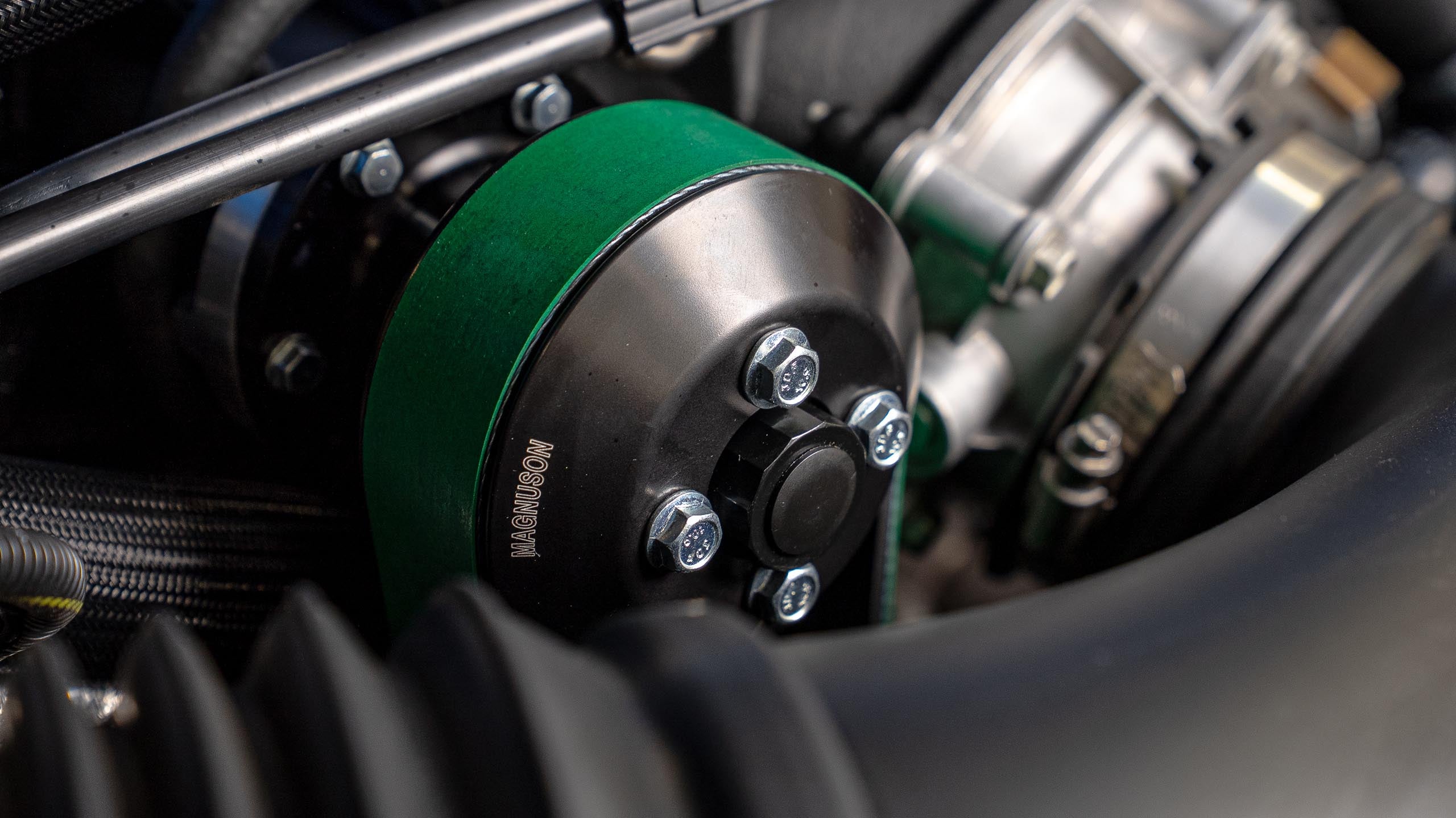
In general, superchargers are low-maintenance add-ons. Magnuson’s superchargers use “maintenance-free” technology– they have self-contained lubrication that doesn’t require regular oil changes or anything. Our systems are engineered to be as hassle-free as possible so you can just drive and enjoy the boost. Here are some key points on maintenance:
- Supercharger Oil: Magnuson superchargers come pre-filled with a special high-temperature synthetic oil in the gear case. This oil is sealed and can last a very long time (often 400,000 miles or more). Unlike older aftermarket blowers, there’s typically no need for routine supercharger oil changes. We do recommend inspecting for leaks and checking oil level at very high mileage, but for most users, it’s truly maintenance-free.
- Drive Belt: The supercharger’s drive belt is a wear item, similar to your engine’s accessory belts. Over tens of thousands of miles, it may stretch or crack and eventually need replacement (just like a normal serpentine belt). It’s wise to inspect the belt condition periodically (say, at oil changes) and ensure proper tension (our kits often include an automatic tensioner). Typically, a belt might last 50k+ miles, and replacements are inexpensive. Keeping the belt healthy ensures your supercharger runs at the correct speed.
- Air Intake Filter: The supercharger feeds off the engine’s air intake. If your kit includes a performance air filter, make sure to clean or replace that filter as recommended (oiled cotton gauze filters might need cleaning every 10k-15k miles, for example). A clean filter helps the supercharger breathe easily.
- Intercooler System: If your supercharger kit has a liquid-to-air intercooler (most do), it will have a separate coolant reservoir/radiator. Check that coolant level occasionally and top off if needed (using the specified coolant mix). It’s a closed loop, so maintenance is similar to your engine coolant – maybe a flush at long intervals. The intercooler pump should be checked to ensure it’s running, especially if you ever notice higher intake temps.
Other than these, there’s not much else. The supercharger unit itself is built to last and doesn’t have fast-wearing parts that need frequent service. Many Magnuson owners have run their superchargers for years with virtually no maintenance besides normal engine oil changes and the occasional belt replacement. It’s also a good practice to use premium fuel as required, since running lower-octane gas can cause knock and that’s not good for a boosted engine. But that’s more of an engine care item than a supercharger maintenance item.
Superchargers do not demand a lot of extra maintenance. They’re designed to be robust. Just treat your engine well (regular oil changes, proper fuel, etc.), keep an eye on the belt and filter, and the supercharger will happily spin along providing boost for tens of thousands of miles. Magnuson’s maintenance-free design means you get all the fun of added performance with very little added upkeep. It’s one of the reasons a supercharger is such a great choice for a street car or truck – all the power, all the reliability, none of the headaches.
What are the different types of superchargers? (Roots vs. twin-screw vs. centrifugal)
All superchargers serve the same purpose – forcing more air into the engine – but they come in a few different designs. The main types are positive displacement (Roots and twin-screw) and dynamic (centrifugal). Here’s a quick rundown:
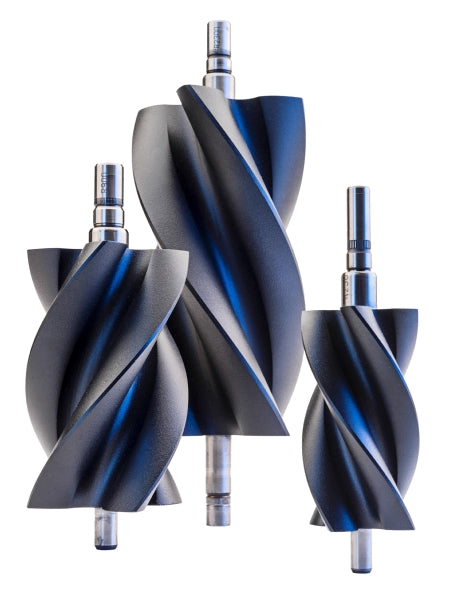
- Roots-Type Supercharger: This is the oldest style (patented in the 1860s!) and a Magnuson specialty. A Roots supercharger uses two counter-rotating lobed rotors to grab air and move it from the intake side to the engine. It’s a positive displacement pump – meaning it delivers a fixed volume of air per revolution, providing instant boost and a nearly flat boost curve at all RPM. Roots blowers are known for their immediate throttle response and strong low-end and mid-range torque. They also often produce that classic supercharger whine sound. Historically, older Roots designs were less thermally efficient at high boost, but modern advances (like Magnuson’s Eaton TVS high-helix 4-lobe rotors) have made them highly efficient across the entire RPM range. Magnuson’s superchargers are Roots-type and are used in many OEM applications. (Fun fact: The Eaton TVS rotors in Magnuson superchargers are the same type used in the 755hp Corvette ZR1 and other high-performance factory cars.)
- Twin-Screw Supercharger: Also a positive displacement design, a twin-screw (Lysholm screw) supercharger compresses air internally between two meshing screws. It also provides immediate boost like a Roots, but with a slightly different process: it actually compresses the air within the housing (Roots just pushes air). Twin-screws are very efficient and can achieve higher boost with less heat, over a narrow range. They tend to cost more to manufacture.
- Centrifugal Supercharger: This type looks more like a belt-driven turbocharger. It’s a dynamic compressor that uses an impeller (like a little fan wheel) to accelerate air and then diffuser passages to build pressure. They build boost in a curve – typically low boost at low RPM, ramping up to high boost at high RPM. This means the peak horsepower gains can be very high, but you won’t feel as much extra torque at lower revs compared to a Roots/twin-screw. Think of them as delivering a more “gradual” boost increase – your car will feel stock at low RPM and then hit hard near redline. They also tend to have a more subtle sound (a high-pitched whistle vs. the whine of a Roots).
There are a few other less common types (like scroll-type superchargers and electric superchargers), but the vast majority of superchargers you’ll encounter fall into one of the three categories above. Magnuson’s products are Roots-style, specifically using Eaton’s latest TVS rotor packs (which are twisted Roots rotors). We favor this design because it provides the best all-around drivability, immediate torque, and proven reliability for street-driven vehicles.
Each type has its niche: if you want instantaneous boost and a factory-like power band, a Roots or twin-screw (positive displacement) supercharger is ideal. For a street performance upgrade, the positive displacement blowers are often preferred – and that’s where Magnuson excels. Our Roots-type superchargers give you consistent boost at all engine speeds, making your car feel like it has a much larger naturally aspirated engine.
In summary, the types differ in how they deliver air and power, but all can significantly increase performance. Magnuson’s roots-based superchargers hit the sweet spot for daily-driven performance enthusiasts by offering immediate, robust power gains with OEM-style integration. You get the best of both worlds – boost on demand and rock-solid reliability. (Plus, who can resist that sweet supercharger whine when you punch the throttle?)

Are supercharger kits street legal and emissions compliant?
Enthusiasts often worry if adding a supercharger will make their vehicle illegal or unable to pass emissions tests. Good news: Magnuson supercharger systems are engineered to be street legal in all 50 states, including California, when installed as directed. We take emissions compliance seriously. In fact, many of our kits carry a California Air Resources Board (CARB) Executive Order number, which means they’ve been tested and certified not to increase pollutant emissions. For example, the Magnuson kit for the 5.7L Tundra is CARB-certified (EO #D-488-58). This certification is your guarantee that the supercharger meets the clean air requirements and is legal for road use.
When you install a CARB-approved Magnuson supercharger, you retain all your factory emission control devices (catalytic converters, EVAP systems, OBD-II monitors, etc.). Our included ECU calibration is designed to keep things within emission specs. So your vehicle should pass smog checks just like a stock vehicle. We provide a sticker with the CARB EO number to place under the hood, which inspectors can reference. It’s the same process as any other street-legal aftermarket part.
It’s important to note: Not every supercharger kit on the market is automatically emissions legal. Always check if the kit has a CARB EO if you live in a state that requires it. Magnuson excels in this area – we’ve worked closely with regulators to get our popular kits approved. Many of our superchargers were even offered through OEM dealerships (e.g., TRD Toyota superchargers by Magnuson), which further underscores their compliance and reliability.
If a kit does not have an EO (for example, perhaps for a very new model in the process of certification or a race-only application), it would be intended for off-road or competition use. But the vast majority of Magnuson’s catalog is street friendly. We’ll be clear in our product info about the status of emissions legality.
In summary, yes, you can supercharge your car and remain street legal. Just use a quality, proven kit like Magnuson’s that is designed with emissions in mind. You get the performance benefits and you stay on the right side of the law. Always check local regulations if you’re outside the US, but in most places, if the kit doesn’t delete or disable emissions equipment and passes the sniff/test, you’re good to go. Magnuson superchargers are built to give you boost without the worry. So go ahead and enjoy that extra power on the street – legally!